


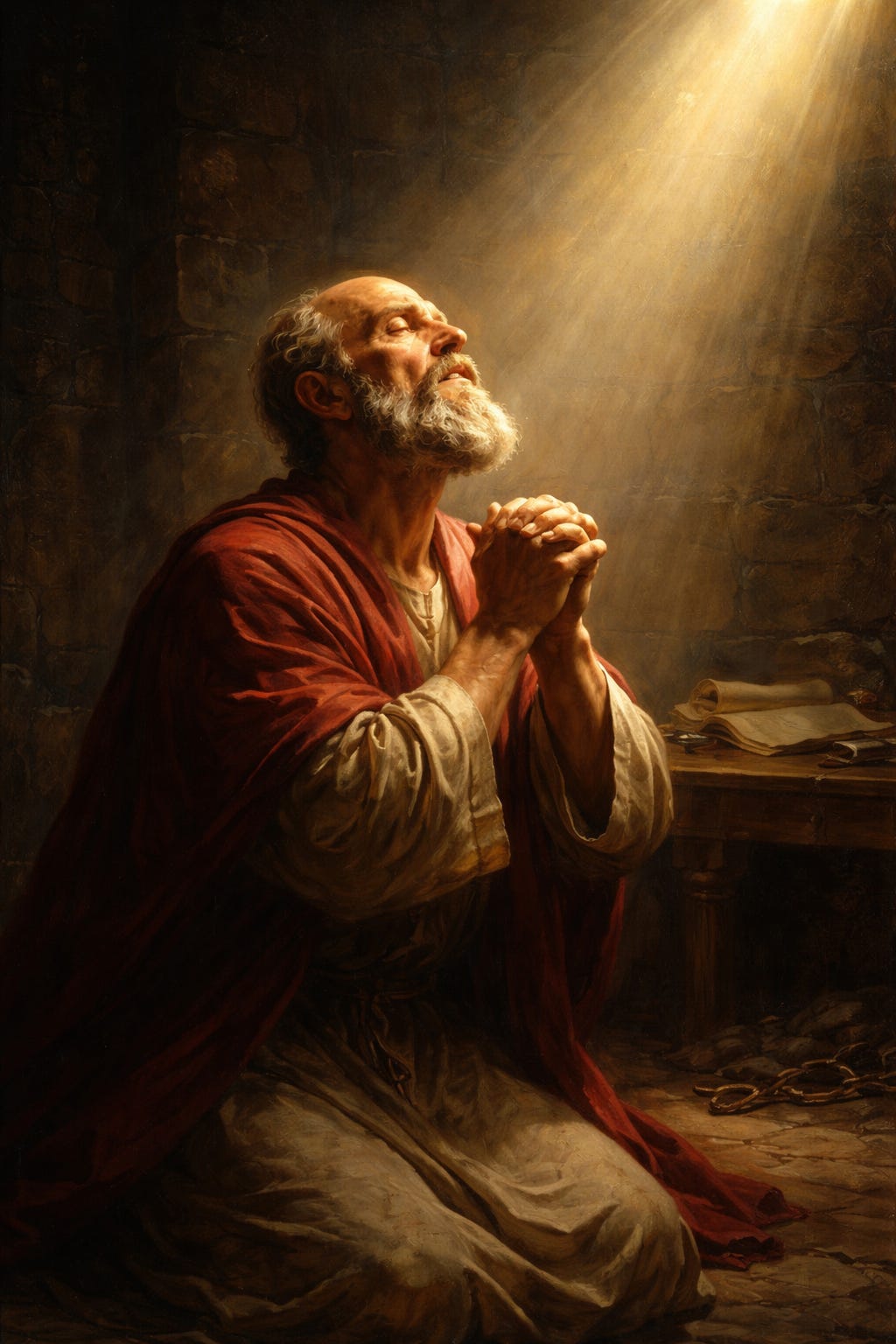
The central message of Scripture is not merely moral improvement, nor even institutional religion. It is the Kingdom of God. From Genesis to Revelation, the Bible reveals a sovereign King reclaiming His people and restoring His rule over creation.
Some rightly say that the gospel is the heart of the Christian message. That is true. But the gospel is the gate. It is the means by which we enter the Kingdom of God. The good news announces what the King has done through Christ so that rebels may become citizens.
This is why clarity matters. If we misunderstand the Kingdom, we will misunderstand conversion. If we misunderstand conversion, we will misunderstand the Christian life.
When Jesus spoke with Nicodemus in John 3, He interrupted religious confidence with a sobering truth:
“Unless one is born again he cannot see the kingdom of God” (John 3:3).
Notice the language. Not attend. Not observe. Not admire. See. Entrance into the Kingdom requires regeneration.
So we must begin where Jesus began: with the doctrine of the new birth.
Regeneration: A One-Time Act of God
In much of modern Western Christianity, regeneration has been reduced to church involvement, baptism, or completing a membership class. While these practices have their rightful place, they do not define whether someone has been born again.
In the early church, Christian identity was not determined by external affiliation alone. The apostles preached repentance toward God and faith in Christ (Acts 20:21). They proclaimed a transformation so profound that Paul described it as becoming “a new creation” (2 Corinthians 5:17).
The new birth is not a gradual process. It is a divine act.
Jesus compared it to physical birth (John 3:5–8). Many theologians have understood His reference to “water” as an image connected to natural birth. Whatever the precise nuance, the analogy is clear: birth happens once. It is decisive.
John Calvin wrote,
“The Spirit is the bond by which Christ effectually unites us to Himself.”
That union begins at regeneration. It is not stretched over months or years. It is not the result of self-improvement. It is the sovereign work of the Spirit.
Regardless of where one places regeneration in the ordo salutis, Reformed theology has consistently affirmed that it is a monergistic act—God alone gives life. As Paul says, “God… made us alive together with Christ” (Ephesians 2:4–5).
Sanctification, by contrast, is progressive. It unfolds over time. But regeneration is the moment when a sinner is justified before God and clothed in Christ’s righteousness (Romans 5:1; Philippians 3:9).
Being born again is not self-reformation. It is resurrection.
Not the Same as Church Commitment
Church commitment is essential. The New Testament assumes believers are embedded in local congregations (Hebrews 10:25). But membership does not equal regeneration.
Consider this sobering reality: one of the most remarkable local churches in history was the community personally led by Jesus during His earthly ministry. And yet Judas was present.
Jesus said of him, “One of you is a devil” (John 6:70).
Judas heard the Sermon on the Mount. He witnessed miracles. He participated in ministry. Yet he was not born again.
This reminds us of Augustine’s distinction between the visible church and the invisible church. Not all who are outwardly associated with Christ are inwardly united to Him.
Regeneration is experiential, not merely organizational. Church involvement may place someone under faithful gospel preaching, and God often uses that means to bring about the new birth (Romans 10:17). But attendance itself is not proof of life.
The evidence of regeneration is not longevity in church culture. It is new spiritual life.
Not Merely an Emotional Experience
Regeneration may involve emotion, but it is not defined by emotion.
The Philippian jailer “rejoiced along with his entire household that he had believed in God” (Acts 16:34). Paul speaks of “godly grief” that produces repentance (2 Corinthians 7:10). Joy and sorrow may accompany conversion.
But emotion alone does not equal regeneration.
Judas felt remorse (Matthew 27:3). Simon the magician asked for prayer when rebuked (Acts 8:24). Feelings stirred, but hearts remained unchanged.
Jonathan Edwards warned in Religious Affections that strong emotions can exist without genuine spiritual transformation. True conversion involves a change of nature, not merely a change of mood.
The Spirit gives new desires. New loves. New hungers.
It is deeper than tears. It is a new heart (Ezekiel 36:26).
Not Simply Becoming More Religious
James speaks of “pure and undefiled religion” (James 1:27). But he is not calling Christians to increase ritual performance. He is redefining religion from external display to inward transformation that produces quiet obedience.
In Jesus’ day, many religious leaders prayed publicly to gain social honor (Matthew 6:5). Their righteousness was performative.
Being born again is not becoming more visibly religious. It is becoming inwardly alive to God.
As Martin Luther declared,
“The law says, ‘Do this,’ and it is never done. Grace says, ‘Believe in this,’ and everything is already done.”
Regeneration moves us from earning to receiving. From display to devotion.
True religion is what God sees when no one else does.
Jesus’ Definition of Eternal Life
In John 17, Jesus gives perhaps the clearest definition of eternal life:
“And this is eternal life, that they know you, the only true God, and Jesus Christ whom you have sent” (John 17:3).
Eternal life is relational knowledge.
The Greek word for “know” (ginōskō) often carries the meaning of intimate, relational knowledge. It is not mere awareness. It is communion.
When Jesus says in Matthew 7:23, “I never knew you,” He is not denying omniscience. He is declaring absence of relationship. These individuals prophesied, cast out demons, and performed mighty works. They were active. They were visible. But they were unknown relationally.
John Owen captured this beautifully:
“Communion with God consists in His communication of Himself unto us, with our return unto Him of that which He requires and accepts.”
Regeneration begins this communion.
It creates hunger.
Psalm 119 expresses this longing: “My soul is consumed with longing for your rules at all times” (Psalm 119:20).
A born-again believer may struggle, may stumble, may doubt—but there is hunger. There is desire. There is movement toward God, not indifference.
The First Cry of Life
When Jesus appeared to Ananias and sent him to Saul, He gave a simple sign of authentic conversion:
“Behold, he is praying” (Acts 9:11).
Prayer is the cry of new life.
Just as a newborn’s first cry signals life, so spiritual birth produces prayer. The Psalms repeatedly link prayer with crying out:
“In my distress I called upon the Lord… from his temple he heard my voice” (Psalm 18:6).
“I cry aloud to God, aloud to God, and he will hear me” (Psalm 77:1).
Prayer may begin with desperation, but it grows into intimacy.
It starts with need. It matures into love.
From Beginning to Intimacy
The Christian life does not remain at the level of crisis. Regeneration initiates a relationship that deepens.
When Western Christianity reduces “personal relationship with Jesus” to personal preference, it empties the phrase of biblical meaning.
A personal relationship does not mean we define the terms. Christ does.
It means that, privately and sincerely, we desire Him. We read His Word not to win arguments but to know His heart. We seek Him when no one applauds.
This is what separates living faith from cultural Christianity.
Statistics often reveal the drift. Some surveys suggest that younger Christians pray daily at far lower rates than older generations. Whatever the exact percentages, the trend points to a shift—from intimacy to identity, from communion to label.
But Scripture calls us back.
The Kingdom of God is entered through regeneration. Regeneration produces relationship. Relationship produces hunger. Hunger produces growth.
The gospel is the gate.
But the Kingdom is the life we live under the rule of our King.
May we not confuse activity with birth, emotion with transformation, or religion with regeneration.
And may we, like Saul of Tarsus, be known first by this simple evidence of life:
“Behold, he is praying.”