


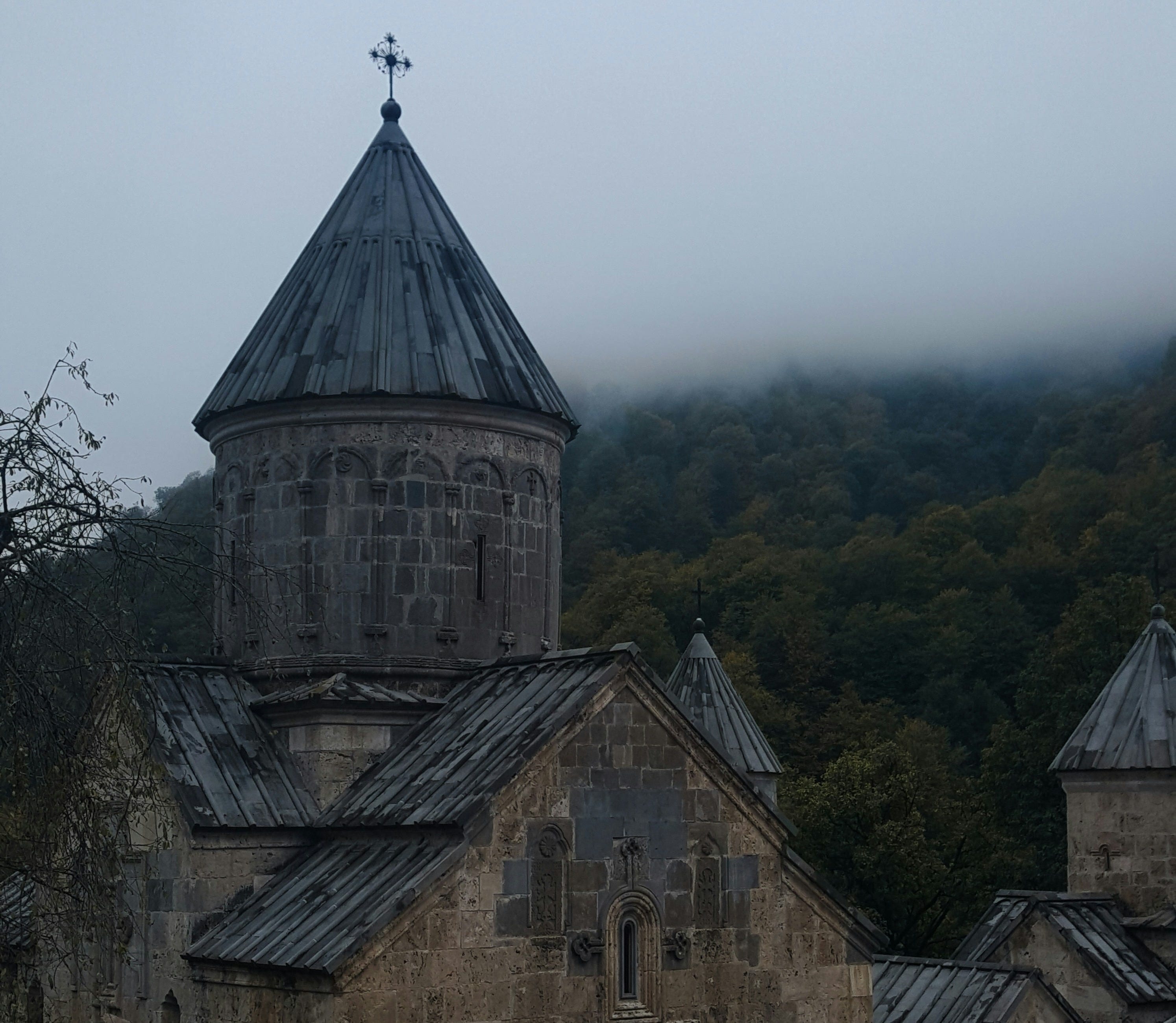
When I visited Geghard Monastery in Armenia, I was surprised by what I saw.
The place was loud and crowded. People were eating, talking, laughing. Several weddings were being officiated at the same time, overlapping with one another. It felt spontaneous and alive—very different from what we usually expect from an Orthodox church setting, and not at all like a typical evangelical environment.
At first, it felt strange.
Then the tour guide shared a piece of history that changed how I understood everything.
In historic Armenian Christianity, the church building was not seen only as a place for prayer and worship. It was the community center of the village. Life happened there. Births, weddings, gatherings, and conversations all took place in the same space.
The church was not an event people attended.
It was the center of daily life.
That insight brought me back to something deeply biblical.
The Church Was Never Just a Place
The Bible never defines the church as a building. It describes the church as a people—a community of Christ’s followers (Acts 2:42).
In today’s highly organized world, we have lost much of that sense. Church has often become something we go to once a week, rather than a life we share daily.
In the New Testament, churches were not large gatherings. They were small house meetings, where believers shared life together (Acts 2:46).
This helps explain why Paul describes a church leader as someone who can lead his own household well (1 Timothy 3:4–5). The early church was made up of many small communities functioning like families.
Scripture even names them this way. Paul speaks about Aquila and Priscilla and the church that met in their home (Romans 16:3–5).
Church as Family, Not an Event
In this model, the church functioned as a family marked by mutual care, respect, and shared responsibility (Ephesians 5:21).
Paul refers to Timothy and Titus as his sons in the faith (1 Timothy 1:2; Titus 1:4). Leadership was relational and personal, not distant or institutional.
Faith was lived openly. In Acts 2, believers gathered daily, not just weekly (Acts 2:46). Growth was visible. Accountability was natural. Life and faith were intertwined.
Joining a church was not about preferences. It meant belonging—growing together as newborn believers learning how to walk in Christ (1 Peter 2:2).
A Simplicity We Need Again
One of the great losses in modern society is the loss of family as a lived reality. That loss has deeply shaped how we experience church.
The early church model was simple, but it was deep. Minimal, but strong. It required presence, patience, and shared life.
Church was never meant to be something we attend once a week.
It was meant to be a way of life (Colossians 2:6).
If this reflection resonates with you, I’d love to hear from you.
Send me a message, and let’s think together about how small, simple spiritual communities can take shape again—where faith is lived, not just attended.